CASE STUDY 01 / 03

Smart Lockers Platform

A reusable multi-tenant control plane that keeps business applications separate from locker and device execution.

System
Multi-tenant IoT control plane
Ownership
Platform Architect & Full-Stack Engineer
Technical difficulty
Reusable device orchestration and command lifecycle
Production proof
Production Reusable platform
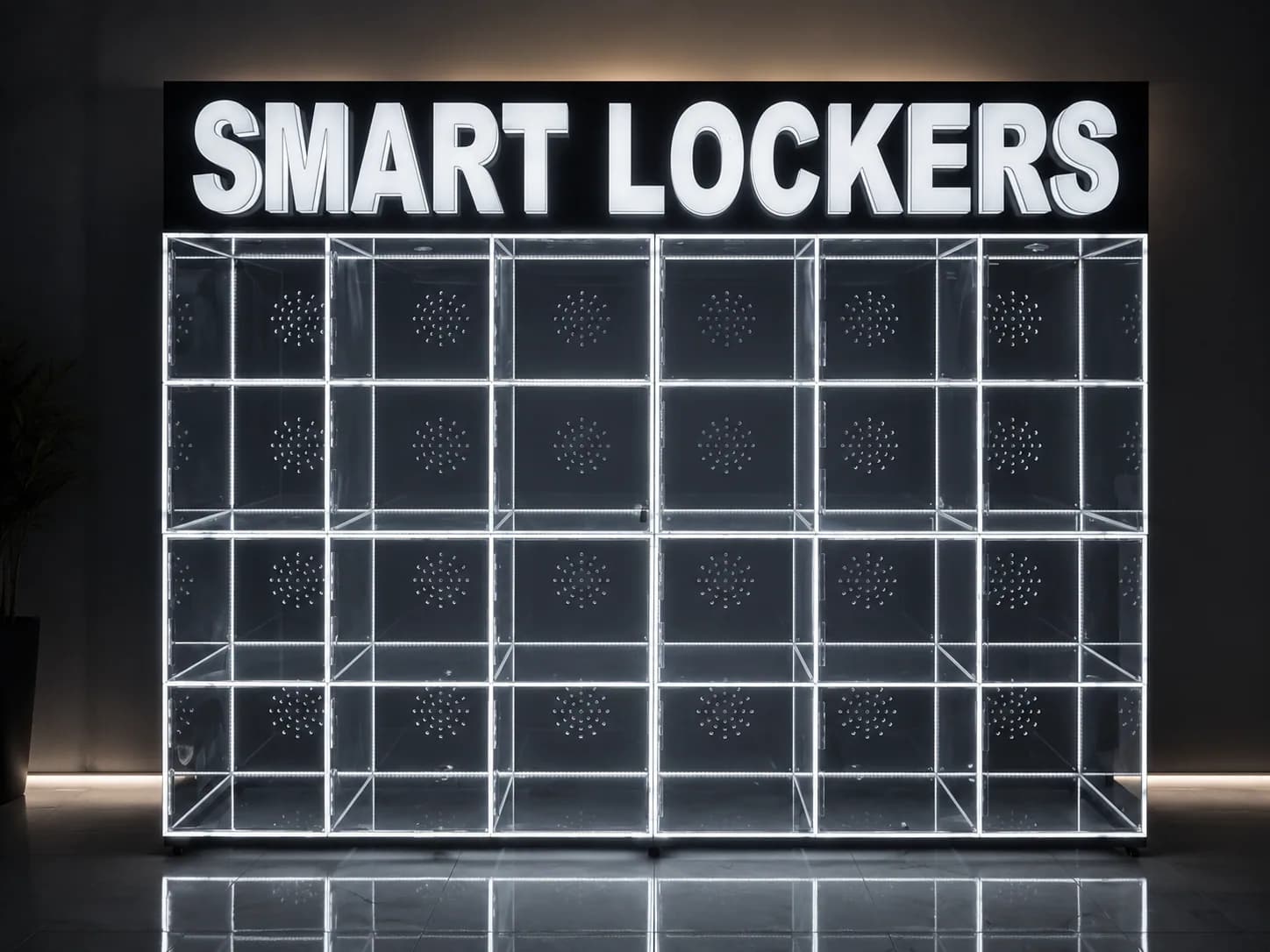
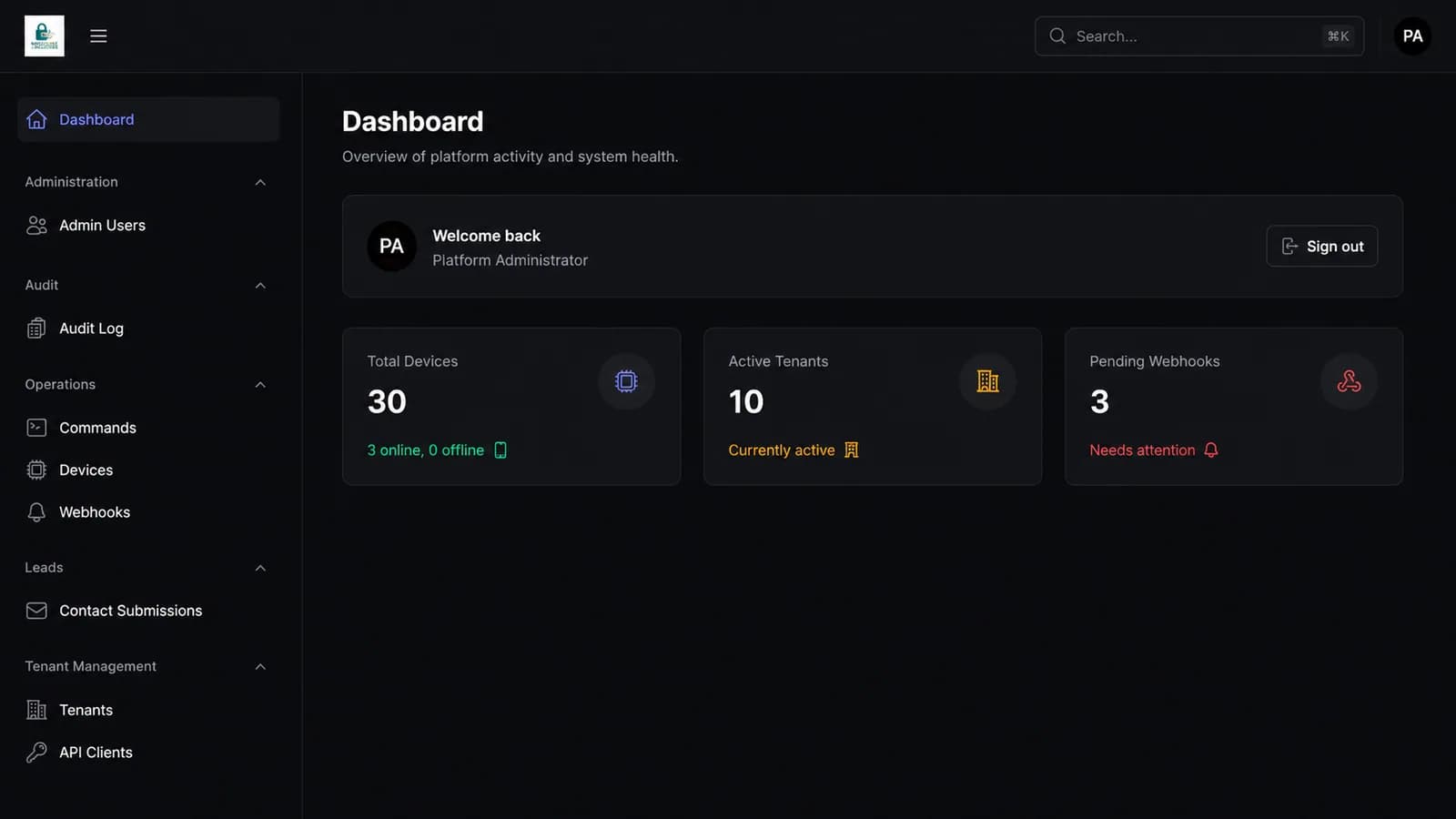
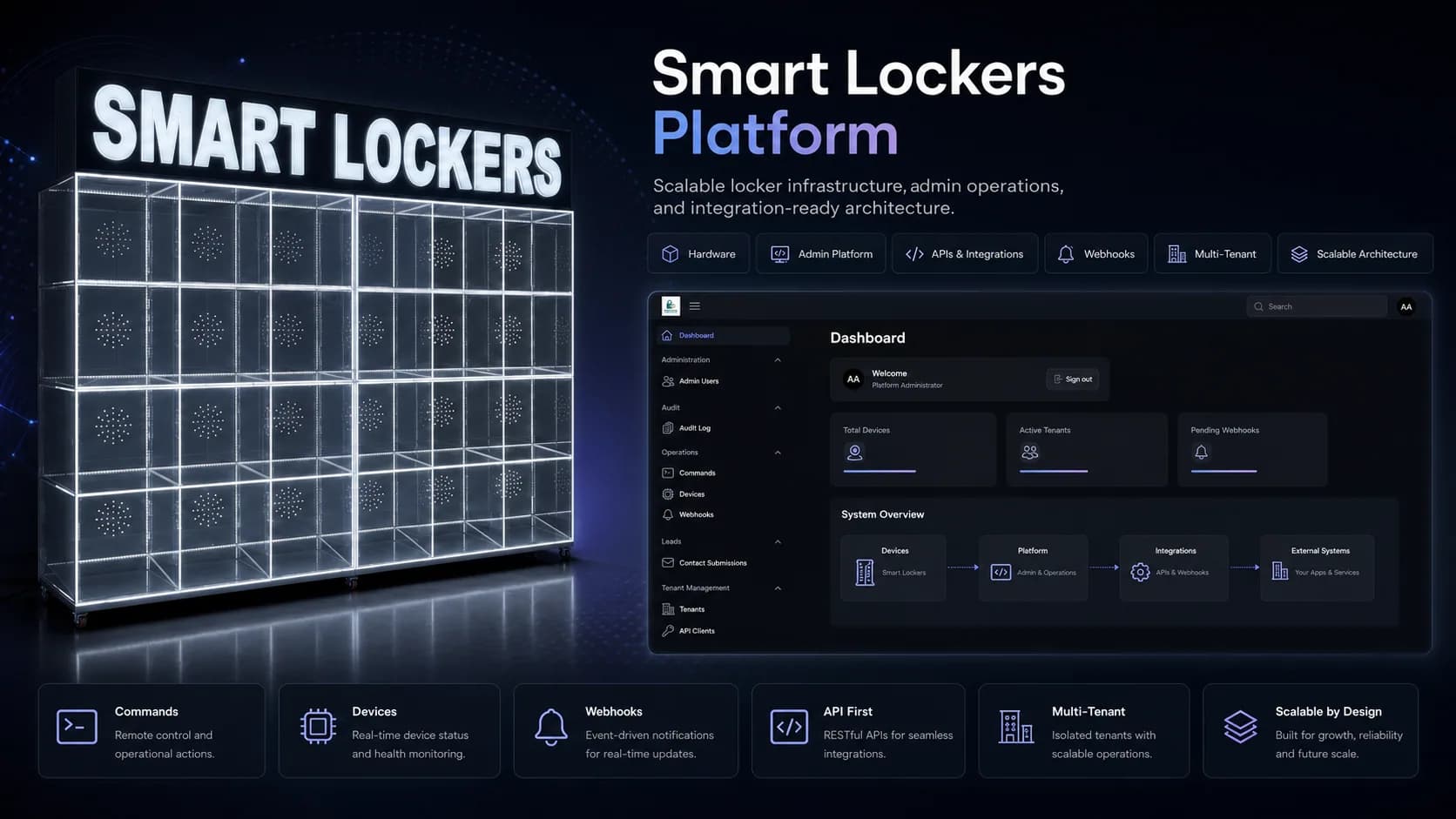
Smart Lockers Platform product cover
An independent control plane that separates business systems from locker and device orchestration.

The operating context.

Business workflows needed a stable integration boundary without embedding hardware behavior into every application that used the lockers.

A platform-first Smart Lockers architecture that connects business systems to hardware through a reusable Laravel boundary, queued command processing, MQTT, and webhook callbacks.

What I owned, explicitly.

Role
Platform Architect & Full-Stack Engineer
Ownership model
built entirely
Responsibility boundary
Reusable device orchestration and command lifecycle
Project status
live

What made the system difficult.

  • Commands cross a cloud-to-machine boundary and cannot be treated like synchronous browser requests.
  • Business applications and machine execution require separate responsibilities.
  • The platform must support more than one business application and machine deployment.

04 / SYSTEM DECISIONS

Boundaries chosen for a reason.

01

Create one reusable control plane

Problem
A one-off integration would repeat device rules inside each business product.
Boundary
A Laravel platform owns the tenant, API, command, and callback boundary.
Why it mattered
Future business applications can connect through the same orchestration model.
02

Keep machine execution outside the business system

Problem
Cloud workflows and physical device execution fail in different ways.
Boundary
MQTT and machine-side Python sit behind an explicit command lifecycle.
Why it mattered
Device behavior remains isolated from product and tenant rules.
03

Make command progress observable

Problem
Queued delivery and device callbacks are not immediate.
Boundary
Queued processing and webhook callbacks preserve explicit command state.
Why it mattered
Delayed delivery and recovery remain part of the workflow instead of invisible edge cases.

Failure belongs in the architecture.

  1. Queued commands preserve work when immediate delivery is unavailable.
  2. MQTT delivery and machine-side execution remain separate from business-state changes.
  3. Webhook callbacks reconcile device outcomes with the control platform.

06 / SYSTEM ANATOMY

Read the boundaries before the components.

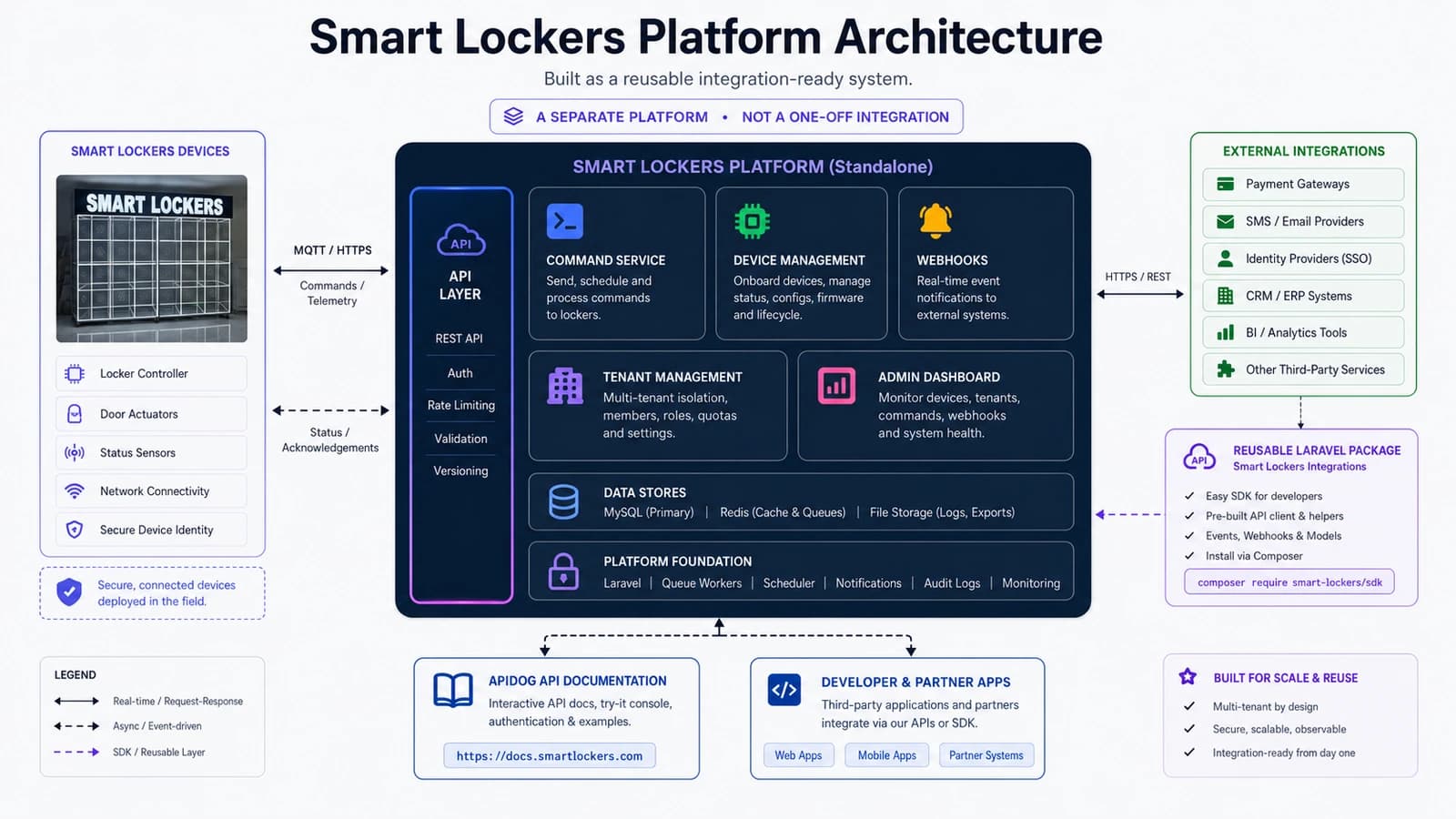
Smart Lockers architecture diagram
Public architecture overview of the Laravel control plane, queued command lifecycle, MQTT boundary, and machine-side execution.

07 / PRODUCTION EVIDENCE

Only the proof the public record supports.

Production
Reusable platform
Designed for multiple business applications and machine deployments.

The capability left behind.

The result is a reusable platform boundary rather than a single hardware integration.

09 / TECHNICAL STACK

Technology with a job to do.

Laravel 11
Tenant-aware API, orchestration, commands, and callbacks.
PHP 8.2
Backend runtime for the reusable control boundary.
Python
Machine-side execution and hardware integration.
MQTT
Asynchronous communication across the device boundary.
Redis
Queued command processing and operational state.
Raspberry Pi
Supporting production technology.
Filament
Supporting production technology.
Supervisor
Supporting production technology.